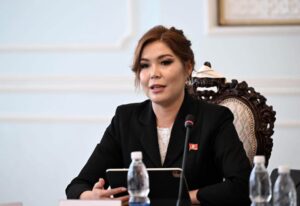
“When Women Unite, They Can Transform an Entire Village”: Support for Women’s Networks Discussed at the Jogorku Kenesh
A member of the “Tynchtyk Bulagy” network from Batken Region, Nurgul Ysakova, raised the question of the future of women’s associations after the completion of projects during a meeting between rural women and members of the Jogorku Kenesh.
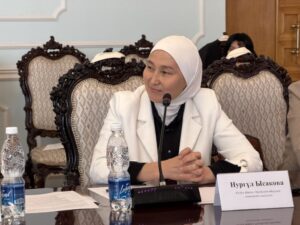
According to Nurgul Ysakova, the creation of the network helped women from different villages and regions realize that many of the challenges they face are similar — from shortages of irrigation water and drought to disputes arising at the local level.
The most important change, however, came when the women began sharing their experiences and supporting one another’s initiatives.
“Most importantly, we no longer felt that we were alone with our problems. We realized that by working together, we can achieve much more than each of us could individually,” Nurgul Ysakova noted.
Today, members of the Tynchtyk Bulagy network do more than meet during training activities. When women in one village develop a successful approach to saving water or cooperating with local authorities, they share that experience with network members from other communities.
One of the key questions for the network members, therefore, is how to sustain this cooperation after the project ends and establish lasting partnerships between women’s associations and national and local authorities.
In practical terms, this means holding regular consultations with local authorities, ensuring women’s participation in discussions on water and climate issues, and establishing a clear and transparent procedure for considering initiatives submitted by several villages.
Nurgul Ysakova addressed this question directly to the members of parliament and representatives of government institutions:
“Are you ready to support such inter-village women’s associations as permanent partners of local authorities — involving them in joint initiatives, exchanges of experience, and efforts to address common challenges affecting several villages?”